What a Croissant Taught Me About Home
LEARN MORE

FROM THE OWNER’S DESK | by Stephen Lewis
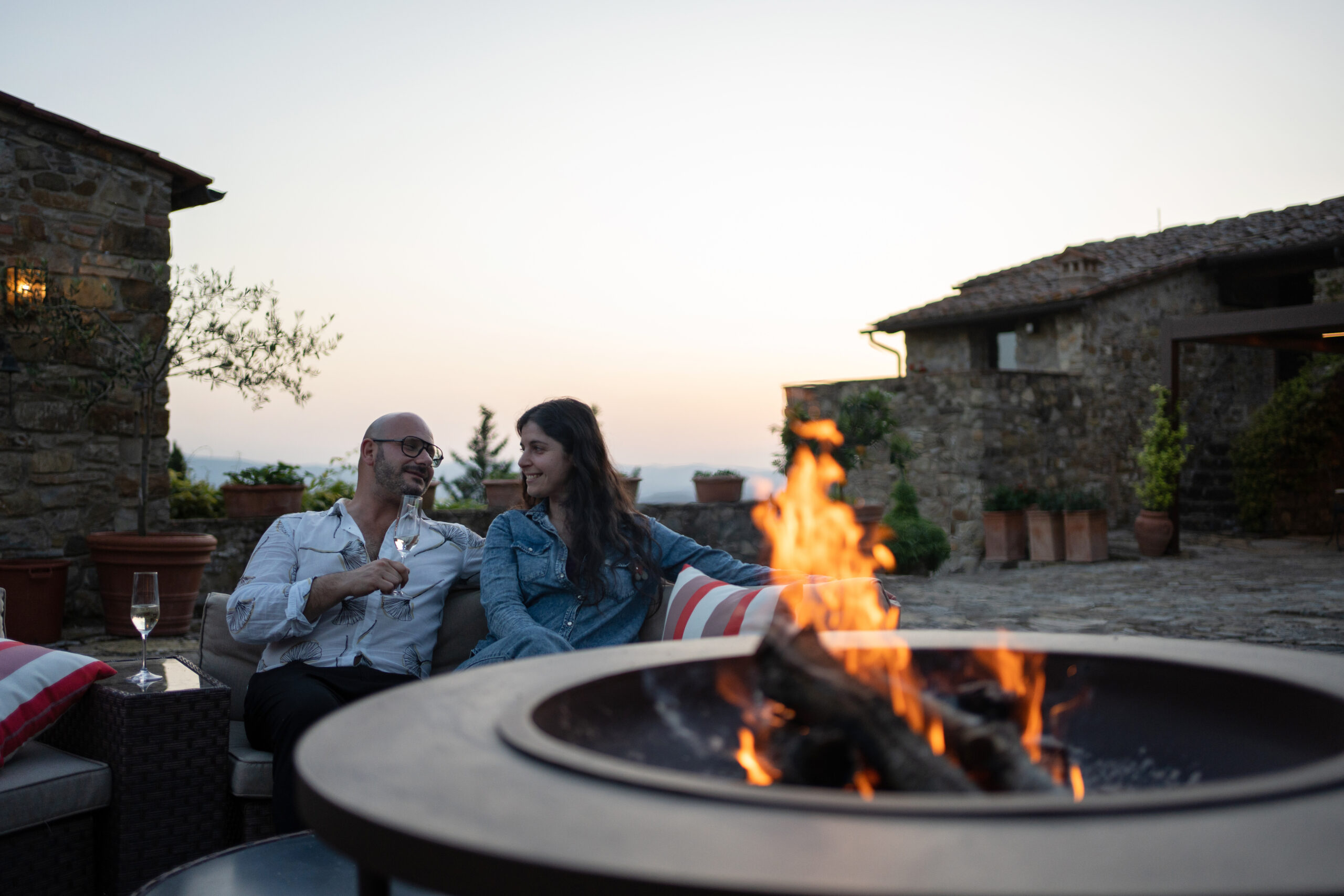
There is an Italian concept, il dolce far niente, that means “the sweetness of doing nothing.” There may be no time of the year when the concept is put into practice more than in these last, languid days of summer, when much of the country takes a collective two-week holiday for Ferragosto. But I have been thinking lately of a wonderful day that I spent with friends a few weeks ago, in early July. I had always understood intellectually the meaning of “il dolce far niente,” but it was on that July day that I truly felt its meaning.
After an eventful June, when Villa Ardore was enjoyed by four delightful families, a different one each week of the month, we had a few days before the next guests arrived. Villa manager Francesco, Assistant Villa Manager Massimo, and groundskeeper Riccardo—dear friends as well as colleagues—had the idea to take advantage of the break and enjoy the villa ourselves. And so, late on a warm Sunday morning, not long after the distant church bells had ceased to ring but before the cicadas had yet begun to hum, Franci, Massi, Riccardo, Riccardo’s wife Alice, and their young son Diego and I all descended upon the Villa Ardore pool.
Of course we did not, strictly speaking, do nothing. We swam, we talked, we laughed. We made lunch and ate it, accompanied by Aperol and Campari spritzes. We suppressed our laughter as little Diego told us his little boy stories that, to his four-year-old mind, I’m sure, made perfect sense. And we swam some more, and talked some more, and laughed some more, until before we knew it late afternoon had arrived. Then we got out of the pool in sunlight filtered gold by the late-day humidity. We cleaned up after ourselves, showered, dressed, and drove to the nearby town of San Pancrazio.
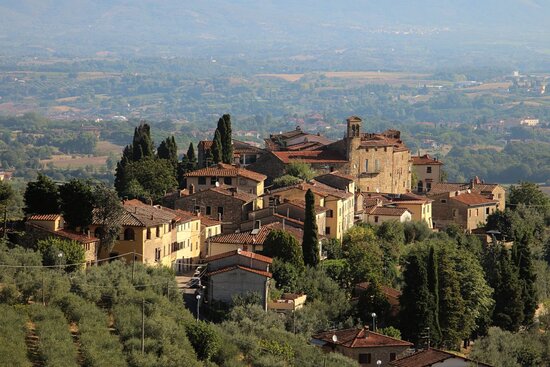
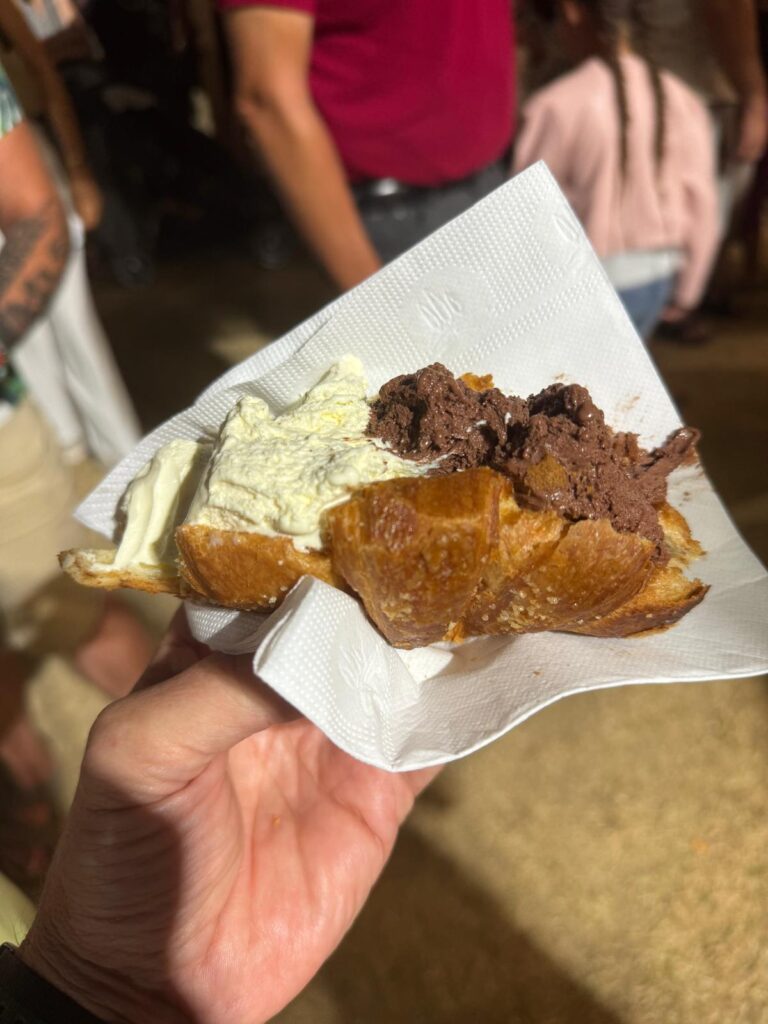
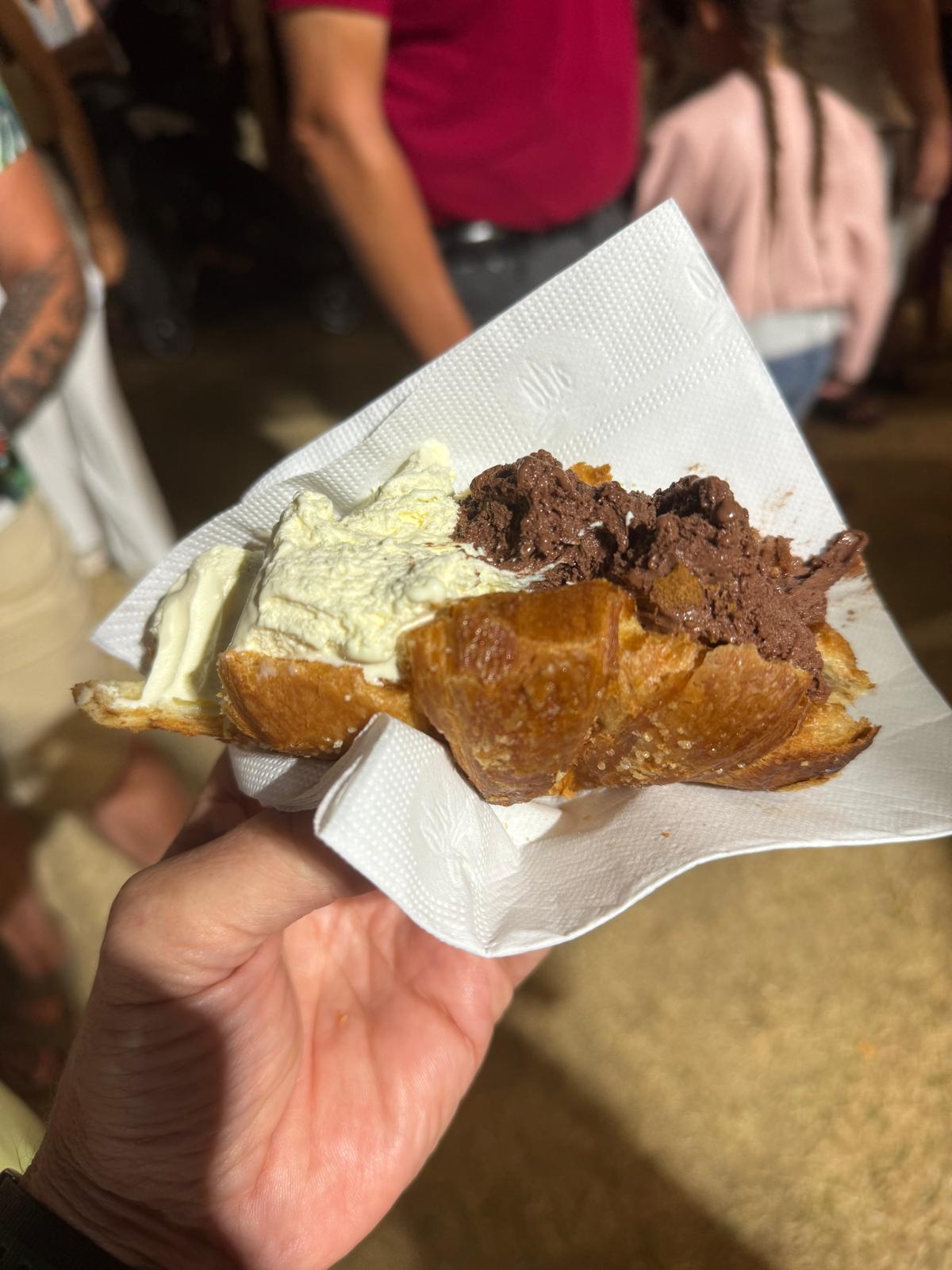
We went there because that small medieval town, jointly with another nearby village, Lucignano, was having a sagra, or festival, celebrating a favorite dessert, brioche e gelato. It is a sort of ice cream sandwich made from a cornetto—a sweet but not buttery croissant—split open to hold two or three scoops of locally-made gelato. It is even more delicious than it sounds, but I did not yet know that when we arrived. Nor did I know that, before the brioche e gelato, we would have dinner at the festival, which was a pleasant surprise.
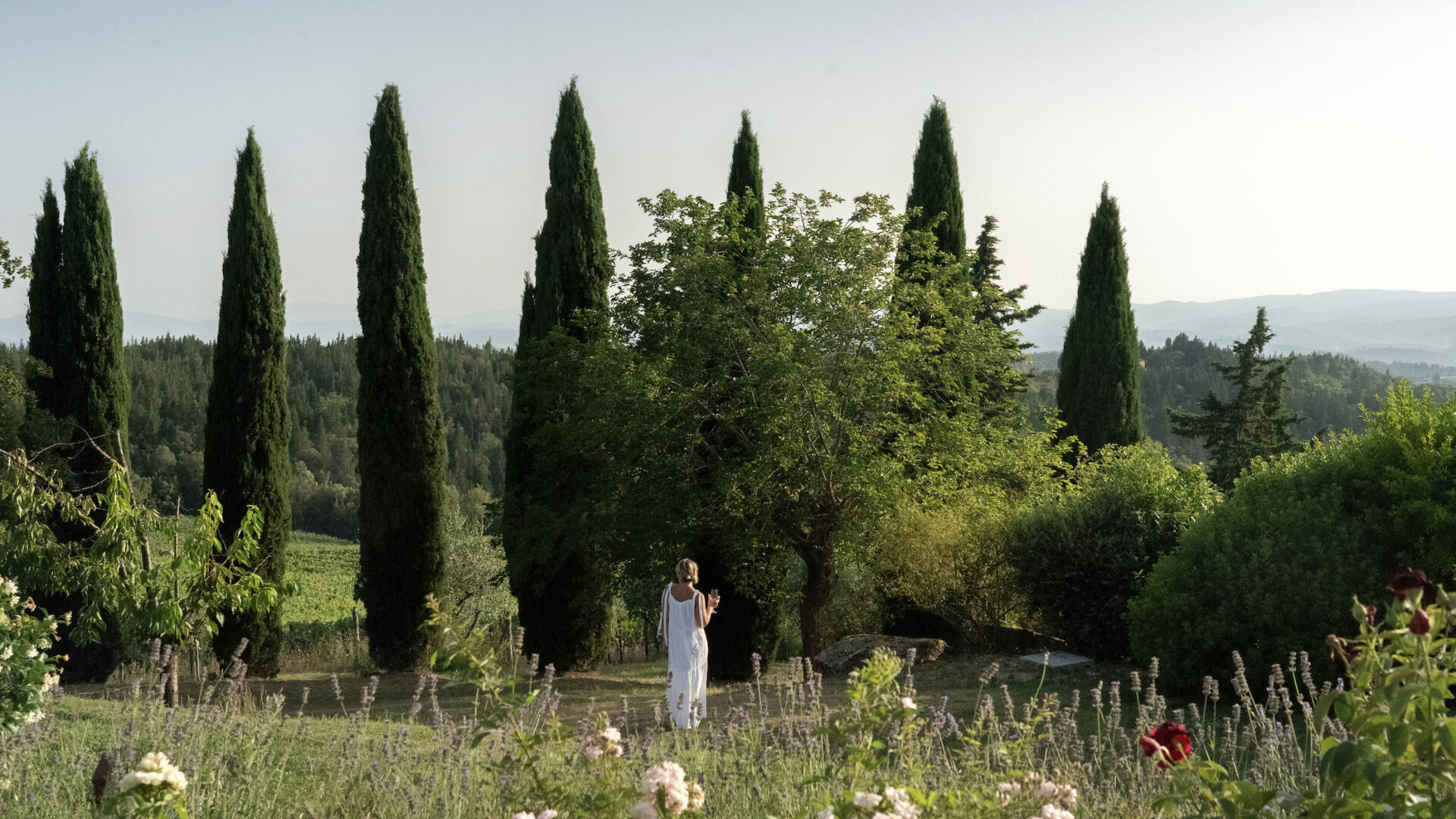
We parked our cars in a small public parking area below the town’s principal church and, not knowing exactly where to go, walked into a caffè-bar and asked for directions. We were sent the wrong way. Realizing that we were walking away from, and not toward, the festival music that we could hear, we turned around. As we passed by the caffé-bar again, the proprietor saw us and ran out, embarrassed and apologizing that he had said a destra (to the right), when he had meant a sinistra, but his mortification quickly faded as he laughed with us about a mistake that we’ve all made at one time or another. And then we friends, Diego on Riccardo’s shoulders but chattering away to Alice, followed the music to the festival, passing through the lengthening shadows of cypress trees lining the narrow road just before the sun sank below the far-off mountaintops.
After five minutes we reached the line to enter the festival. It was that time of a summer evening when the sky turns a dusky blue but it will still be light for the better part of an hour, and people’s voices carry in murmurs through the air. A young man in a t-shirt that said STAFF in bold red letters handed us photocopies of a menu with a simple but thoughtful selection of pastas, meats, and vegetables to choose from, and a small pencil to mark our selections.
Waiting in line, our little group at first talked among ourselves as Diego played in the nearby grass, sword fighting an imaginary opponent with a stick. But soon we were talking with others standing in line around us. The line was long, but no one was in a hurry. No one complained that their feet hurt or that they were hungry. I think that this was because those of us in line did not feel as though we were waiting to experience what we came for; we were already experiencing it.
After a little while, as dusk grew nearer and the festive atmosphere grew, we reached the end of the line and gave our orders to the two ladies, residents of the villages putting on the sagra, who had volunteered for that role. We then went to sit at one of the long tables where people sat with their friends and families and next to others they did not know. Those who came together talked amongst themselves, but from time to time included their neighbors, who joined the conversation and then, unselfconsciously, returned to their own.
Just as dusk fell, the children of the two villages, all between about 14 and 17 years old, wearing the same staff t-shirts that we had seen earlier, began to bring us our food. The food that they carried was cooked for us by their parents, working under temporary, canopy-covered kitchens. All of them were volunteering their time, and all of them were, in some sense, hard at work. But none of them appeared to feel themselves to be working so much as participating in the joy of the sagra. Whether due to the joyful and embracing atmosphere or the quality of the ingredients and how they were prepared, our food was wonderful. And after dinner there was, of course, the brioche e gelato.
Most of the adults had reasons to wake early on Monday morning and, a couple hours before midnight, the crowd began to thin. We, too, walked back to our cars, not feeling the need to fill the occasional silences in our quiet conversation. Diego, again carried by Riccardo, was this time not on his shoulders but sleeping in his father’s arms as his parents talked softly to each other.
Going into the weekend, I had a list of things to accomplish. I did some of them on the Saturday and thought that I’d have a few hours to do the rest on the Sunday. As I drove home from San Pancrazio, the lights of Poggibonsi dotting the valley below, I remembered the things that I had not done. Normally, the realization that I had not done all that I had planned would fill me with, if not dread at a mounting list of tasks, at least annoyance with myself. On this occasion it did not. I had spent my Sunday doing nothing. Glorious, sweet nothing. And I was content.
This month’s recipe:
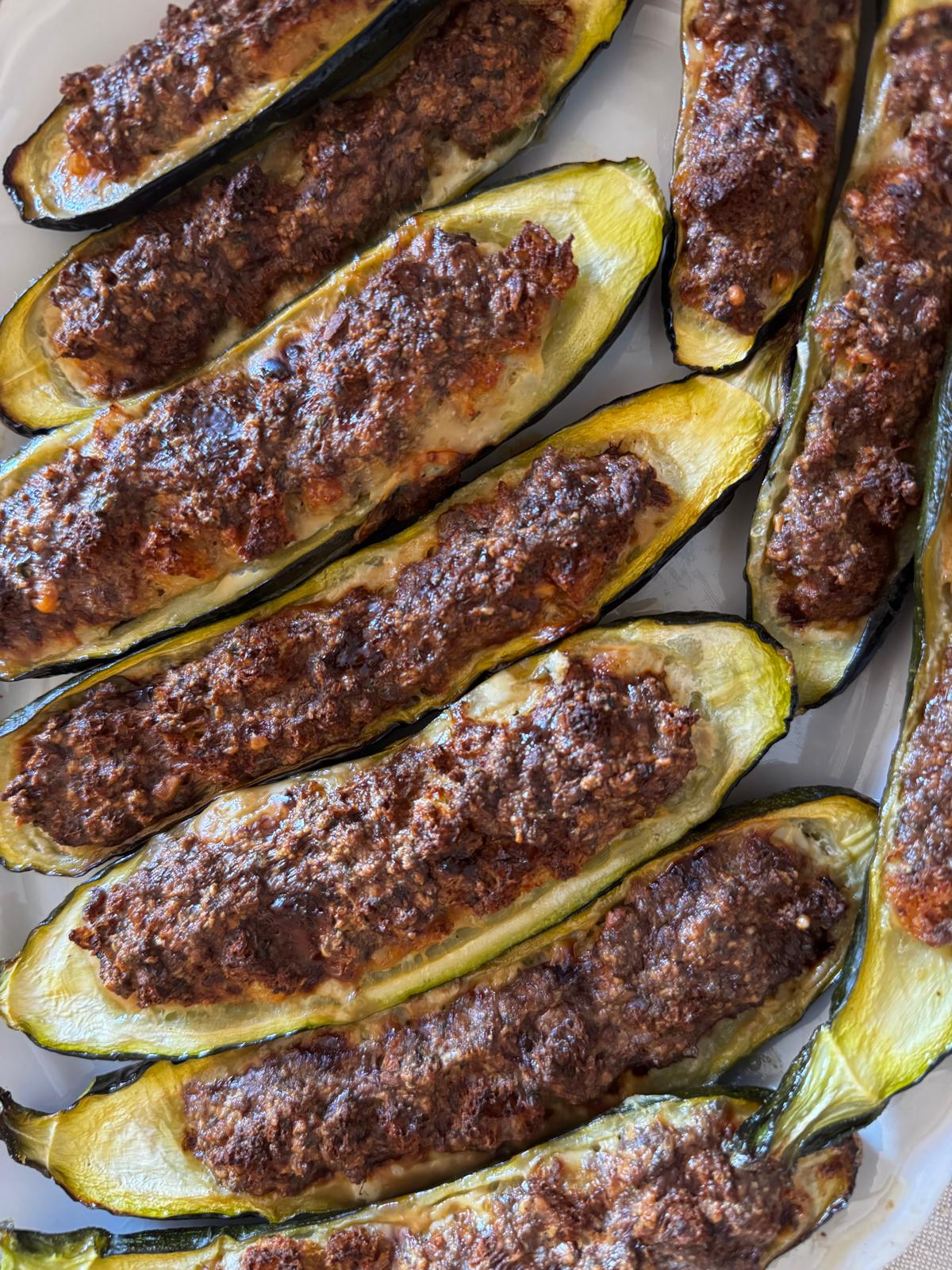
Zucchine Ripiene (stuffed zucchini)
The Villa Ardore organic garden has teemed with zucchini all summer and, in August, they reached their peak—both of flavor and production. As anyone who has ever grown zucchini knows, it is a prolific plant, so we have found that the best August zucchini recipes are those that use several at once. The recipe that we are sharing this month, a very characteristic, traditional Tuscan way to cook zucchini, accomplishes that goal and has the additional virtues of being both delicious and easy to make; an important consideration for these last, lazy days of summer.
Ingredients:
Method:
Transfer to a serving platter and enjoy.

This site is protected by reCAPTCHA and as such,
is subject to Google’s
Terms of Service and
Privacy Policy.
By subscribing, you agree with our Privacy Policy